Get Your Dryer Vent Right — Code, Installation & Safety
Plain-language guides to IRC Section 504, duct length limits, cap selection, cleaning schedules, and everything else that determines whether your dryer vent passes inspection — or starts a fire.
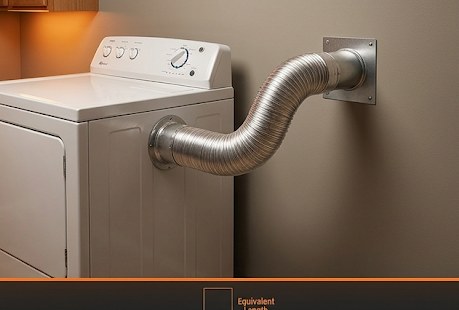
What Are You Trying to Figure Out?
Duct Length Calculator
Enter your elbows and run length. Instantly see if you're within the IRC 35-foot equivalent limit.
Code ComplianceMax Duct Length Rules
The 35-foot rule, equivalent length deductions for elbows, and when a booster fan is allowed.
Velocity PageBooster Fan Compliance
Is a dryer vent booster fan code-legal? When it's required vs. prohibited. What inspectors check.
InstallationThrough a Brick Wall
Core bit sizing, fire-stop requirements, cap selection, and step-by-step for masonry penetration.
Velocity PageBird Guard vs. Louvered Cap
Which termination cap is right for your climate, duct diameter, and pest pressure?
Velocity PageApartment Renter Guide
Shared duct systems, landlord responsibility, and how to tell if your vent is clogged.
Understanding IRC Section 504
The International Mechanical Code (IMC) Section 504 and its IRC equivalent govern every aspect of clothes dryer exhaust systems in the United States. Most homeowners never read it — and most dryer vent problems trace back to that gap.
The code isn't complicated when translated into plain language. Here's what it actually covers:
IRC 504 Plain-Language Guide
Every subsection explained for homeowners. No legal jargon.
Gas vs. Electric: What's Different
Gas dryers have additional venting requirements most guides skip.
Prohibited Duct Materials
Foil accordion flex, plastic, vinyl — what's banned and why.
10 Common Code Violations
The violations inspectors flag most often, with photos and fixes.
Routing Guides for Every Situation
Where the dryer sits determines the challenge. Basement, second floor, interior wall, brick exterior — each requires a different approach. These guides address the actual procedural details, not just the concept.
Through an Exterior Wall (Frame)
The most common install. Hole sizing, vapor barrier, fire-stop, and cap selection.
Through a Brick Wall
Core bit sizing, mortar patching, fire-stop materials, and masonry cap options.
Roof Termination: Pros, Cons, Code
When it's allowed, when it's not, and how to do it correctly.
Long-Run Solutions
When your run exceeds 35 feet: reconfiguration options before the booster fan conversation.
Basement Laundry Routing
Under-floor runs, crawlspace risks, and the shortest path to an exterior wall.
Replacement in Finished Walls
How to re-route or replace ductwork without opening every wall.
Cleaning Schedules, Costs & DIY Guides
Lint accumulation is the leading cause of dryer fires in the US. The cleaning interval depends on your duct length, usage frequency, and whether you dry heavy items like towels and blankets. "Once a year" is a starting point — not a universal answer.
How Often Should You Clean?
A schedule based on actual variables: loads per week, duct length, fabric type.
DIY Cleaning Step-by-Step
Tools needed, full procedure from dryer back to exterior cap, and what to look for.
Professional Cleaning: What to Expect
What a pro does that DIY misses, cost ranges, and red flags in a quote.
Apartment & Condo Renter Guide
Shared duct systems, landlord obligations, and how to diagnose a clogged shared vent.
Warning Signs of a Blockage
10 symptoms that mean your duct needs attention now, not at the next annual cleaning.
Dryer Vent Cleaning Cost Guide
What cleaning actually costs in 2024, what drives price variation, and when to hire.
Equivalent Length Calculator
Plug in your duct run — feet of rigid pipe, number of 90° and 45° elbows, flex transition length — and instantly see your equivalent length vs. the IRC 35-foot limit.
Open the Calculator →Dryer Vent Maintenance Checklist (PDF)
A two-page printable checklist covering pre-installation code compliance, post-installation inspection, annual cleaning procedure, and exterior cap inspection. Used by landlords, home inspectors, and DIYers.
Dryer Vent Installation & Maintenance Checklist
2 pages · PDF · Free · No email required
Something's Wrong — Find the Fix
Dryer Takes Too Long
The most common complaint. Usually a vent issue — here's how to confirm and fix it.
Clothes Smell After Drying
Musty smell often means condensation in the duct. Cause and cure explained.
Duct Disconnected Inside the Wall
How to diagnose, locate the break, and repair without opening the whole wall.
Condensation & Water in Duct
Causes, cold-climate factors, insulation requirements, and permanent fixes.
Common Dryer Vent Questions
Under IRC Section 504.6.1, the maximum equivalent length is 35 feet. But "equivalent length" accounts for elbows: each 90° elbow subtracts 5 feet from your allowable straight run, and each 45° elbow subtracts 2.5 feet. So a run with two 90° elbows has a maximum straight-pipe length of 25 feet (35 − 10 = 25). Use the Equivalent Length Calculator to check your specific configuration.
Yes, with conditions. IRC Section 504.6.2 permits listed dryer booster fans when the manufacturer's instructions authorize extended runs and the booster fan itself is listed for use with clothes dryer exhaust. The booster must be interlocked with the dryer so it cannot run without the dryer operating. Some local jurisdictions have additional restrictions — check with your AHJ. See the full Booster Fan Compliance Guide.
IRC 504.6.1 requires rigid or semi-rigid metal duct. Smooth-wall rigid metal (galvanized steel or aluminum) is the best choice. Semi-rigid aluminum flex is permitted in short runs, typically for the transition from dryer to wall only. Foil accordion duct (the shiny corrugated plastic-coated type) and plastic/vinyl duct are explicitly prohibited because they trap lint, collapse under heat, and cannot withstand dryer exhaust temperatures. See Prohibited Duct Materials.
Once a year is the commonly cited minimum, but the right interval depends on your situation. If you run 5+ loads per week, dry lots of towels or pet bedding, or have a run longer than 20 feet, every 6 months is safer. Apartments with shared duct systems may need professional service more frequently because lint from multiple units accumulates. Signs it's time now: longer dry times, hot exterior of the dryer, or a burning smell. See the full Cleaning Schedule Guide.
The code doesn't prohibit roof termination outright, but it's the least preferred option for two reasons: lint buildup at the roof cap is harder to inspect and clean, and the upward run creates a longer equivalent length that often pushes installations over the 35-foot limit. Many local codes and some manufacturers' instructions do prohibit it. If roof is the only option, use a purpose-built dryer exhaust roof cap (not a standard plumbing vent cap) and plan for annual inspection. Full details: Roof Termination Guide.